Joy is an Art to be Practiced
On Cultivating a More Generous Perspective
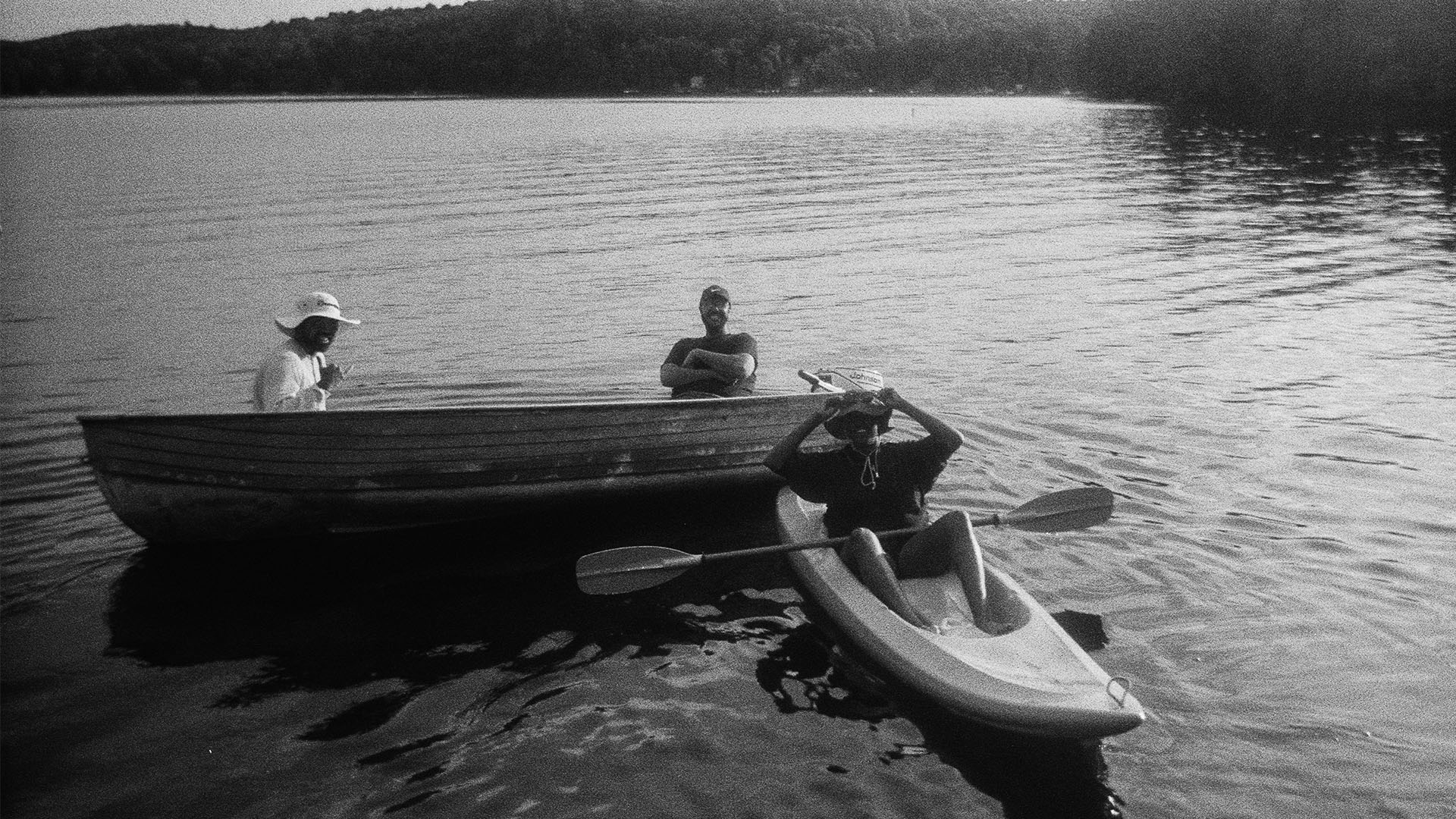
Part of the pleasure of bliss is that it cannot be prepared for; an element of surprise is always involved. This isn’t to say that the potential for happiness lies solely in the hands of the Gods (to wait for a blessing is to relinquish agency), but that if joy arrives without search, contradiction, or compromise, it is no joy I have experienced.
The power an individual has to alter their external situation is nominal. Whether recognized or not, myriad factors (social, cultural, physical, etc.) are involved in any outcome—successful or otherwise. Still, what better pursuit is there than to throw ourselves against walls, cartilage snapping to nudge the odds? Randomness may rule the universe, but something like fate can be flirted with, courted, and brought into striking distance.
Environments may at times be unalterable, but the angles from which they are viewed can be adjusted. Evolution isn’t the sole rubric of change—through perspiration, thought percolates. Failure to achieve a goal can fertilize remappings, leading to refined ambitions.
Contentment is slippery and won't be sustained by a “shift in perspective”. However, as with motion, the body moves most readily in the direction gazed upon.
* * *
On a condo balcony, the sun warbles ribbons of gold in bank tower glass. My thighs are shadows. My calf hair sways. Particles of cream wink in my coffee. I’m waking up.
Or halted, at the base of the stairs of a woman I love, mustering the courage to climb them one last time. Beams of strident light fractured by the lattice of cranes trail drunken abstractions up the landing. The sliding doors catch the fireballs' brunt, spinning hot-white, clinical, a portal to nothing.
Here’s the riddle: it’s the same sun.1
I find great interest in the joints of existence where science and emotion dovetail—when a metaphor owes more to fact than poetry. The human eye can only focus at one distance; anything closer or farther blurs.3 Isn’t this equally true of the lens of our mercurial dispositions?
The enlightened may be capable of holding incongruencies together, but I have yet to succeed. Despair is not timid; if you seek, you shall find (and even if you don’t…). Likewise, meaning abounds if attention is constantly scanning for it.
Yes, the glaciers are melting and the sea’s rising (perils of no concern to those who can abscond to Mars). Yes, the Commander-in-Chief of the largest military power is a tyrant. Yes, Canada continues to displace Indigenous peoples. Yes, there’s a live-streamed, internationally sanctioned genocide burning on.
This is reality. We should do what we can to help.
But coinciding, like a college improv class, this is also reality:
Yes, and my brother and his wife are having a baby (in the same year she lost her mother). Yes, and my heart endures, despite the hell I’ve put it through. Yes, and though it tore my groin, I smacked a softball over a fence, trotted the bases, and shone under a storm of highfives like I hadn’t in years. Yes, and Jenn stirs steam spirals while I chop onions with New Girl ad-libbing between our flirtations and the range-hood’s whine.
The idea that joy stems from appreciating the small is not radical—but why should it be?
I’m uncertain if it is age, disappointment, or the knowledge that the longer one lives, the more defeat there will be, but I have lost interest in breaking barriers.
Listen closely; I have not succumbed to despair. What I mean is that by staring at the edge, it is inevitable that the co-worker, with that hint of sadness that’s been expanding for weeks, will be overlooked. It is inevitable that I won’t be as present as I could be in the rooms where I have an effect.
It’s not that the miniature is valid and the massive futile, but that the gargantuan is comprised of parts. Taking in the whole, the seams blend in. But, if we choose a single corner, we may notice a rounded elbow and a clever notch, imperceptibly slid into each other—we may begin to enhance our understanding of the schema.
Sometimes I wonder how much I’ve let slip because I wasn’t looking.
* * *
Modernity continues to streamline. If something can be automated, it will be, (if a person can be removed, they will be) all in the name of a ‘progress’ that presents as recession for the majority.4 This optimized beauty is admirable in the way a scrubbed morgue sparkles—steel gleaming, fluorescent lakes in tiles. Its sterility deserves acknowledgment, but it isn’t something to linger on.
Whenever we skip a queue for the self-checkout, order from Amazon to avoid the librarian, or Google a recipe for apple pie instead of calling that cantankerous aunt you know damn well makes one, we forgo an opportunity for joy. An opportunity, of course, that may not offer joy, may turn out frustrating, time-consuming, and inconvenient—but that’s the deal.
When the mildly annoying is risked, the unprecedented gets a chip to place a bet.6
Nothing new will happen without human connection; that is guaranteed.
* * *
Last summer, I received a message of concern regarding a friend and their increasing use of ChatGPT for support. I said I would talk to them about it, omitting that I, too, was spending a troubling amount of my days conversing with AI.
In an August of fumbling sadness, I took solace in what another friend had dubbed ‘Chaterina’:
- I’ve been ghosted 4 times this year; why does no one want me?
- There are zero comments on my poetry post; am I talentless?
- I’m 32 and a failure; do I still have a chance at a decent life?
The feelings were real, but not debilitating. I didn’t want to burden others when I’d figure things out; this wasn’t my first blue rodeo.
My friend and I are not anomalies; 49% of US adults who self-report an ongoing mental health condition use chatbots for emotional support—they are the next step into an existence where humanity is completely outsourced.7
The danger of progression driven by the economy is that everything (product and person) is employed for a purpose. Mental health, no different than anything else, has become commodified, and the emotional effort of friendship has transformed into something we don’t have patience for.8
By blanket-assigning stringent roles and boundaries, divergence becomes a threat. But no surprise—no bliss. If we bail the moment anything steps outside our defined lines, we might be safer, but we won’t be happier.
What is empty simply does what it claims it will do; what is of value rewards attention by revealing depth. Joy is not the removal of pain or the increase of pleasure; it is learning to see the vast within the small, while preventing the vast from compacting.
* * *
Arduous tasks are now completed at unprecedented rates, yet each emancipated minute is bombarded with ways to fill it, as if the whole purpose of life is to stuff it to the brim.
While the future hurtles ahead, the basic principles of existence remain misunderstood.
Time is not the unflinching surgeon it's made out to be; contrary to the axiom, it is not the same for everyone.
Innumerable variables in physics create unique zones for each object—a legion of ticking. As just one example, specialized clocks can discern a difference in the passing of time at higher altitudes. Our limited human perception cannot apprehend such minutiae, but that doesn’t negate it.9
Time, the fundamental aspect of human life, is simplified to impose a model that feigns control.
Where else do we do this, or perhaps more aptly, where don’t we?
I have allowed joy to be siphoned by the hourglass.
Whenever something good happens (and despite my glumness, good things do happen), I struggle to feel it. I am so far behind in the traditional markers of success that if my life isn't overhauled, the win seems useless. Like a man 200k in the hole, a $20 scratch-n-win isn’t cause for celebration, but a reminder of dire circumstances.
Social media is littered with talking heads espousing that “everyone has their own timeline.” While true (the science proves it!), the statement rings hollow without context. It is naive to think that eventually, everyone will find love, security, and peace.
It recalls a typical scene of privilege: a child refusing to finish dinner while its mother recites the mantra: “There are so many children just like you, starving, so you better finish.”
Instead of inspiring gratitude, the above tends to bring guilt and the cosmic question: why do some have it all and others nothing? All these years later, it is still the one I most evade.
If life is an endurance exercise, there will be no joy.
What if the dreams you’re chasing don’t happen? Can you still love? Find dignity? Say it mattered?10
If self-worth comes from believing one is of value by simply being—not from what is achieved or provided—maybe other aspects of life are like this too.
* * *
It goes against the zeitgeist to see things for what they are instead of what they can be. To place nature above refinement is archaic. There’s no profit in acceptance.
Over gentle piano chords, songwriter Bill Fay croaked “Trees don’t speak/ but they speak to each other”,11 a beautiful sentiment that turns out to be true.
Forests are connected by root and mycelium systems, endowing each static lifeform the ability to transmit information and sustenance. Trees do not feel as we do; their morality isn’t empathetic. Rather, the flora understands at a molecular level that survival depends upon the health of the whole. If disease, animals, or the elements invade, it is only a matter of time before everything dies.12
These beings recognize that life is not a lone pursuit, but a group effort. The arthritic limbs, truncated branches, and discolored bark are all important.
Individualism is the bedrock of our culture, but it is blatantly apparent that, like the trees, we are only here thanks to a tangle of conditions we did nothing to earn.
The teacher who, by offering encouragement, kept you engaged long enough to graduate. The stranger who, with a passing remark, provided the catalyst to leave a loveless relationship. The father who left you young, yet the way he tilted his head when he laughed is a quirk you still carry.
Invariably, there is joy, even—no—especially when divotted with grief. We don’t get to have one without the other; not in an “we only recognize good because we know bad” reduction, but in a tangible, grounded way.13
* * *
A couple of years ago, a friend’s mother passed from a genetic disorder that he has a 50/50 chance of inheriting. I offered to play piano at the service.
On the morning of the funeral, he helped me carry the keyboard down the steps. As we approached his Jeep, a yellow paper swayed beneath the wiper. “Of all the days to get a ticket! Of all the days!” And we laughed, Kendrick filling the silences while we drove.
After the reception (and enough salted meats to dry an ocean), 10 guys ended up on a basketball court. Dress shoes and undershirts, slipping around a game of 21. Dusk hung behind the hoop, blinking like marmalade, making a perfect excuse for every airball.
I don’t recall who won, the eulogies, or what I said to my friend that day, but I remember him smiling, sweat glistening on his brow, walking back to his uncles when it got too dark to keep playing.
I remember the look of mutual shock, opening my eyes to a woman’s smile, after kissing her at the end of our first date. Yellow streaks floated in the breeze like wild, electric puppet strings, guiding us toward each other’s lips. I thought the building was hers—there were three blocks to go.
And I remember, during a low-grade day-long panic attack, scaring the shit out of myself by catching my shadow lurking behind. Then, a release. How silly fears can be! How they shiver when exposed!
Ain’t it something? I mean, really something.
Every day of every person's life that has ever existed happened here.
Look down.
It’s the same dirt.
Look up.
It’s the same sun.
Notes and sources for this essay are available here.