A Different Kind of Wanting
On the Desire of Desire
Of all I have wanted, I have held very little. It’s not that there haven’t been harvests: the lover in my bed, a future haloed with potential, optimism that life is, even at its most dismal, worth living. But beyond each beautiful gift stretched unease. It was a fear (though I wouldn’t have articulated it then) that whatever success I stumbled into would inevitably collapse—that luck always runs dry.
Baby, I can change!
I just don’t know how.
Emotional appetite appears bottomless. I have been shocked at the lengths I will go for scraps of attention. Conversely, I’ve paced in the stupor of arrival—how peace slams like a cage when you haven't learned to receive.
Desire is complex; so much of why we want what we want presents indirectly. Nudging someone for a chance is child's play compared to convincing them to stay. Chasing a dream can get you lost. But it’s not despair: thwarted passion transforms into opportunities for refined future satisfactions.
Thumbing through my past, certain questions appear, fade, then resurrect:
- Where did I learn to expect disappointment?
- Are my patterns of frustration a self-cure for avoiding agency?
- If so, is what I am drawn to a constructed blockade for the pleasures I could have, and thus, could lose?
Interpreting Lacan, Psychoanalyst Adam Phillips posits that “you can’t have a desire without an inspiring sense of lack.”1 And so it has been—in emptiness, I have felt most energized to modify my life.
But energy without the guidance to aim it can be just as harmful as despondency.
From the age of 15 until my late 20s, I avoided my reflection.
If you’ve never tried, it isn’t easy. Complete aversion requires vigilance and discipline, an oath of religious devotion to self-disgust.
Posture sank.
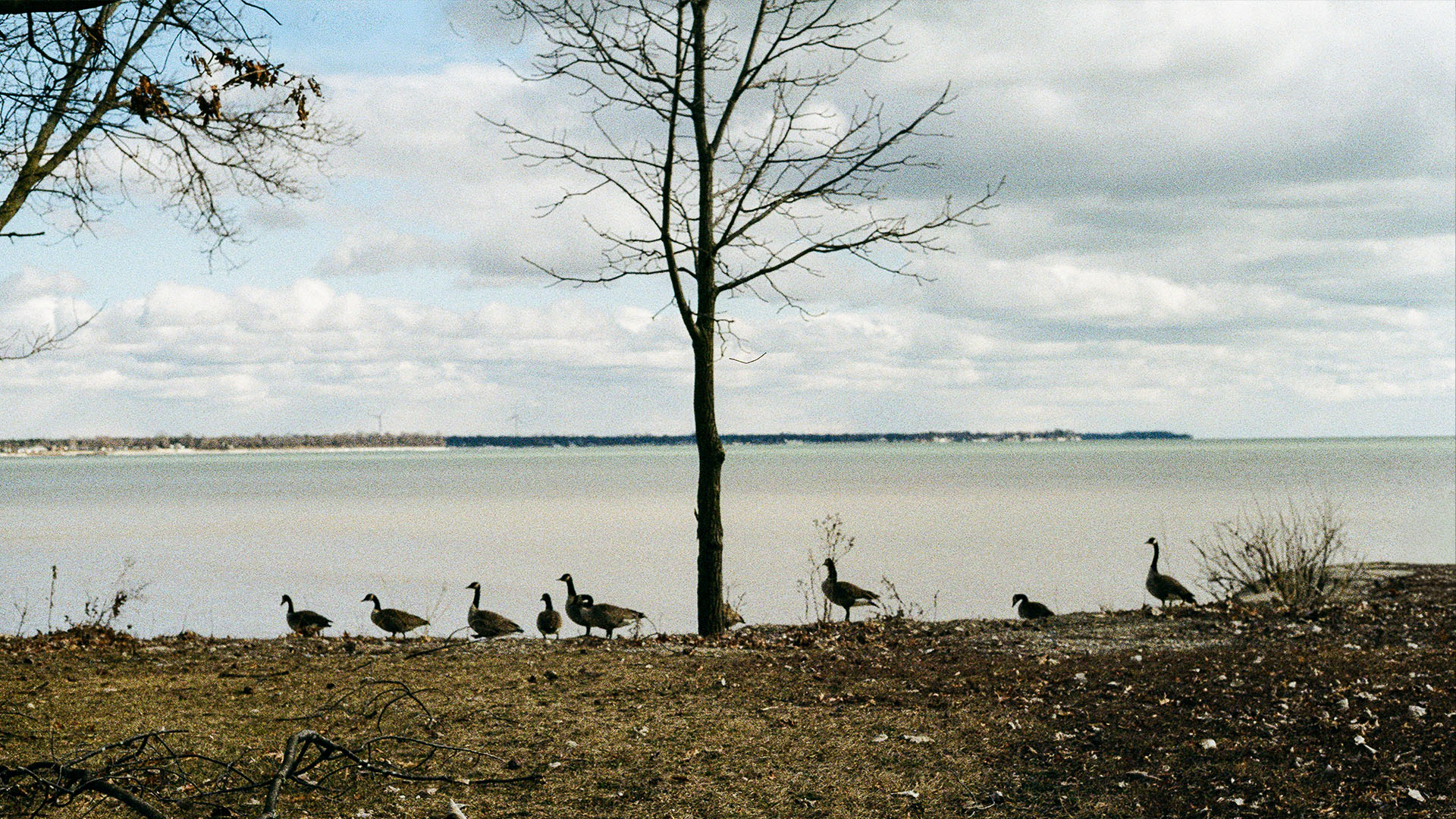
Eyes became geese, a flapping squabble when approached.
Compromises developed: Teeth inspected in the steel fisheye atop urinals. Hair parted in a television's black screen.
Surveying the rare teenage images of me, I can no longer recall exactly what I detested. A row of white Chiclets catching light between lips, shoulder-length hair sketching wisps across an angular nose—I look normal. Pretty, even. A regular kid.
A kid who wanted to be seen, heard, respected—a kid that needed to know he belonged.
Baby, you’re okay!
You’ll find your way.
For insecurity to be substantiated, it must hide. Shame spreads in secret.
In early 2000s North America, self-worth was considered a “girl’s issue.” Admitting my self-phobia would have meant forgoing the cavalier mask I wore like a uniform. This wasn’t a conscious choice; if you’ve never seen someone walk, how would you know to take a step?
The most common place trauma transpires is within the home. Painful, disempowering, and on occasion, reprehensible, these strikes from an intimate relation link betrayal with the traumatic action (or inaction). Without consistent safety—physical and emotional—the child forms elaborate justifications to imitate stability:2
- It can’t be that my father does not want me; I must be bad and unworthy.
- My mother hits me, but it isn’t her fault; it must be for my own good.
The immediate treatment of a physical wound, though unable to erase an experience, allows the body to heal. Without medical attention, the exposed tissue risks infection. In this way, the hurt we inherit from childhood is a laceration, but this is only the first phase of pathogenesis. Our private traumas fester within a society that does all it can to forget.
Absence is born in the nest. On its heels, like a shark to blood, culture dives in with paths of desire to absolve the loss.
I was young. I took the bait.
If I could achieve, I would earn respect. If respected, I would be a romantic option. If I obtained an attractive partner, I would signal status. To win was to be loved (in this definition, love is power, but to the ill-informed there isn’t a difference).
Naturally thin, I wasn’t athletic. Diagnosed with ADHD, school was a struggle. However, at the steps of teenage-hood, I found music, and for the first time, attention. Here was something that came naturally and impressed.
I leaned in. Songs poured out.
A quest for validation, each piece a capsule of loneliness to display: “Look how deeply I feel! See how capable I am of treasuring you!”3
Craft graduated to ritual.
As I committed to the work, I began to notice that even here, where uniqueness is praised, there are pathways. The performance of vulnerability is celebrated, but vulnerability itself is not. Art, the haven that once gifted me social currency, metamorphosed into a solitary hunger.
Lack dripped on, distilling.
I wanted to be the way I should be. Conventional assimilation to the status quo asked for an offering: A controlled burn of the sensitivities that barred me.
A single flame, rippling like a flag in the lighter head’s metal.
I tried, I really did, but a person isn’t a forest; you can’t obliterate sections without jeopardizing the whole.
Come by after the bar ;)
Stay for one more!
Without a dream, there is only temporary relief. Unmoored, I collaged a persona from the detritus.
City lights spurt;
a zigzag of still-lit kitchens, filament,
a blue and white H.
Questions.
Verbal stretching—
Split.
Weight.
Fingers circle cotton.
Antici-
pation.
Lips taut between teeth.
Birds in a hallway,
flutter off walls.
Crashing.
Floor.
Arms to paint.
Throat wrap, firm.
Drag of tongue,
How sweat dries,
lapped in wind.
Getting what you want is bizarre when you’re barely there; a stage play for an empty house. Stranger still is the recognition of mutual performance.
Love is always a creative act, perhaps the creative act, and creativity necessitates a room without judgment. Making is a process—to preemptively know a result negates the entire point. Curiosity accepts the possibility of standing corrected, of discovering inconvenient thirsts.4
Persuading ourselves that we know what we want (and why) is one method of sequestering our fear of needing. It is less risky to feign omnipotence or don a role than to step outside presold narratives.
Performance can be so lifelike that it completely possesses us, and we all act, whether we admit it or not. If similar sensations are experienced by those who choose authenticity and those who purchase prefab (and I am inclined to believe they are), then what, really, is the difference?
Nothing, possibly.
The unexamined life isn’t worth living, but neither is one void of pleasure.5
For centuries, Western culture has prized glory as a masculine ideal. Whether in romance, literature, sport, or conquest, the one on top is of the greatest value—and who wouldn’t want to be king? This lineage persists in our rapid-fire living: “I want it now!” Subtle yearnings that take patience are stamped out.
What is true in the personal is equally true at the macro level.
To borrow from Eduardo Galeano, wealthy nations have the luxury of believing capitalist myths—that hard work will be rewarded—but poorer ones already know it isn’t possible to subsist on ‘someday’.6 From the collective to the individual, what is wanted adjusts to what is possible, and when possibility is dictated by systems of power, our own longings are not free.
If human beings claim identical ideals—safety, love, health, freedom—why, in a world where scarcity increases value, should it be surprising that despite exponential advancements, basic needs remain unmet?
To desire what we can offer rather than receive is diametric to what we are taught. Simone Weil wrote, “The love of our neighbor in all its fullness simply means being able to say to them, what are you going through?”7 If people lived this way—I mean, really lived this way—how different would life be?
If someone had earnestly asked me as a boy how I was, how much faster would I have found my way?
If I had led with interest instead of assumptions with ex-friends, family, and lovers, how many would I still be in contact with?
If bureaucracies approached addiction, poverty, and violence with concern rather than dogma, what would these realities look like?
Of course, this can be dismissed as utopianism, but I disagree—a different kind of living requires a different kind of wanting.
There is no such thing as human nature; there are only systems of power. To acknowledge this is to begin to resist. Institutionalism is entrenched, but a lie that goes so far back that the truth can’t be remembered is still a lie.8
At this moment in time, it may no longer be possible to create change at an organizational level. As the joke goes, “it is easier to imagine the end of the world than it is to imagine the end of capitalism”, but shifts do happen in pockets and patches; I’ve seen it. And that alone is worth striving for, sweating for, whispering to an ear across the gorge between pillows for. It’s worth doing our duty to a future we will likely never see, but are responsible for nonetheless.
To feel like existence mattered—isn’t this, in the end, what we’re longing for?
Notes and sources for this essay are available here.