Now That I Grow a Beard
On What It Is to Grow Up
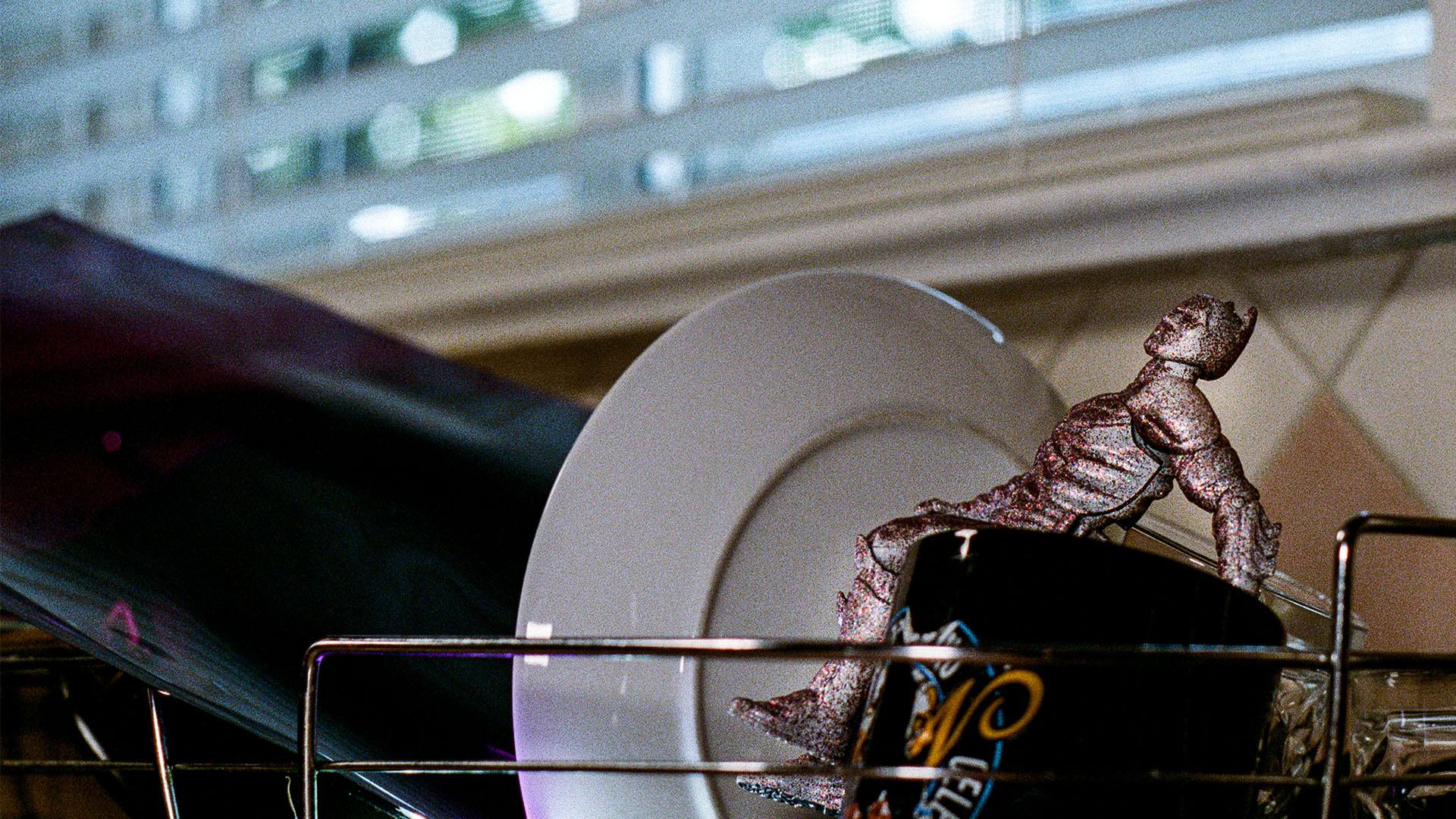
In mid-September, the tymbals of cicadas can still be heard, filling the fading heat with static. Gradually, they show—tepidly at first, then in abundance as autumn’s cooling hands ease in. I’ve never seen one during the longest days; they seem to only expose themselves in death, sitting motionless on sidewalks and in need of canes, heavy and always bigger than I recall. They’re a reminder to my sundown eyes that all is finite.
Yes, I know, you don’t have to say it! I am projecting a lot onto unassuming insects. It happens naturally. My sensitivities flare with each solstice. Memory is most potent in infancy.
Wind, gently lifting a sleeve to caress sun-bleached arm hair, raising braille from flesh. Air from the future, whispering, change is coming.
Then—slam.
I’m fourteen in April. The soaked branches bordering neighborhood sidewalks hang cracked and low like broken fingers. I’m lonely, without the vocabulary to understand.
I’m six in October. My father and I are on the train, clacking toward another doctor’s appointment. The sun pats perfect squares on an empty row of crimson seats across from us; a beam blinds me whenever one of the aluminum partitions is struck. There won’t be a conclusive result. Again.
I’m twenty-four in November, administering whiskey to my lips, trailing the mouth-pop salutation of cork exiting glass—medicine to sleep. I am angry and devastatingly oblivious to it.
The knowledge that humanity continues to march off its cosmic cliff is enough to dredge up nostalgia in anyone. For those like myself, who are prone to the anti-drama of stagnancy, watching shadows shift upon unmoving objects is easily perceived as an attack—a provocation of my inability to succeed, of futile stridulations.
Why, God, do you only smile on others? Angels, why do I need crises to see you?
Around and around myself, the universe revolves.
Dog Day Cicadas, the species found in Toronto (where I live), have a lifespan of up to five years—I thought it would be weeks. 1 Learning of their extended existence bothered me. Eat sap, sing, crushed in the canals of white Nike treads; it’s a life not so far removed from our own.
This summer, through road-baked heat, their voices snuck beneath the foam pressing my ears, filling the gaps between songs, my blotchy brow glowing orange from the sun’s backward walk. They accompanied me on empty benches and downtown corners, my beginner crow’s feet splashed in the headlights of midnight cars. Their high-pitched whines were a supporting vocal at the last barbecues of the year, a far-off look in my eyes. You see, I was touring the old days, replaying holograms of my skinnier self—drunk, loud, avoiding—but with a hope behind the bravado that has receded (among other things) with age.
The past can wrap so tightly around you that tomorrow and today vanish, crushed by the gravitational force of before. Once clutched in its grip, other hands are needed to pull us back to the living.
My therapist, a kind man with a beard the monochrome of newspaper, also happens to be a Rabbi. In session, he said that often, the concept of a punitive God—of atonement for the sin of being human—stems from the relationship between child and parent. We hoist the presence of our caregivers up the flagpole of mythical hierarchy, and voilà, the earth is out to swallow us in dirt.
When a worldview is skewed, it is difficult to know which way to go.
* * *
September as a return is embedded in those who grew up in North America. For all that is colonial, capitalist, and hierarchical in our educational systems, there is a safety it provides—a track painting mile markers. You know where you are, where you have been, and where you should one day arrive.
Until you’re spit out, and living becomes more complex than “success” and “failure”.
As the leaves begin to fall and the young march toward a future that can still be whatever they want, I notice mine closing in. I do not believe that what is briefly held between the hands of a clock is scarce. Yet, I am ashamed for having been thus far unable to adhere to the prescribed rubric.
I disagree with much of the world; I carry its weight all the same.
Are we bound to act in systems we are opposed to? Can we sit out the game, or are we forced to play, whether we accept the terms or not?
Sitting at my laptop, running a hand down my semi-trim beard, I wager I appear comical—the exaggeration of a mall Santa raking through coarse, ginger hair. It is almost unreal to believe this is the same face I pressed to foggy school bus glass, the same pools beneath my eyes that have been well fertilized with tears of goodbye, the same flushed cheeks that have rested upon the chests of a faded few, the same jaw that I fight to believe can smile the same smile before weariness burrowed itself, unannounced and unnoticed but ever-affecting, somewhere fluid and resistant, deep in the recesses of my ribs
I exhale a bowling-ball breath.
A window is open, and the hum of electricity is beginning to overpower my diminishing insect choir. They get two to five years; I’m capable of nearly ninety— a long way to go, a long way to try.
I don’t understand the purpose of cicadas, but I don’t doubt that they have one.
So it’s possible, I guess, that it is the same with me.
Notes and sources for this essay are available here.